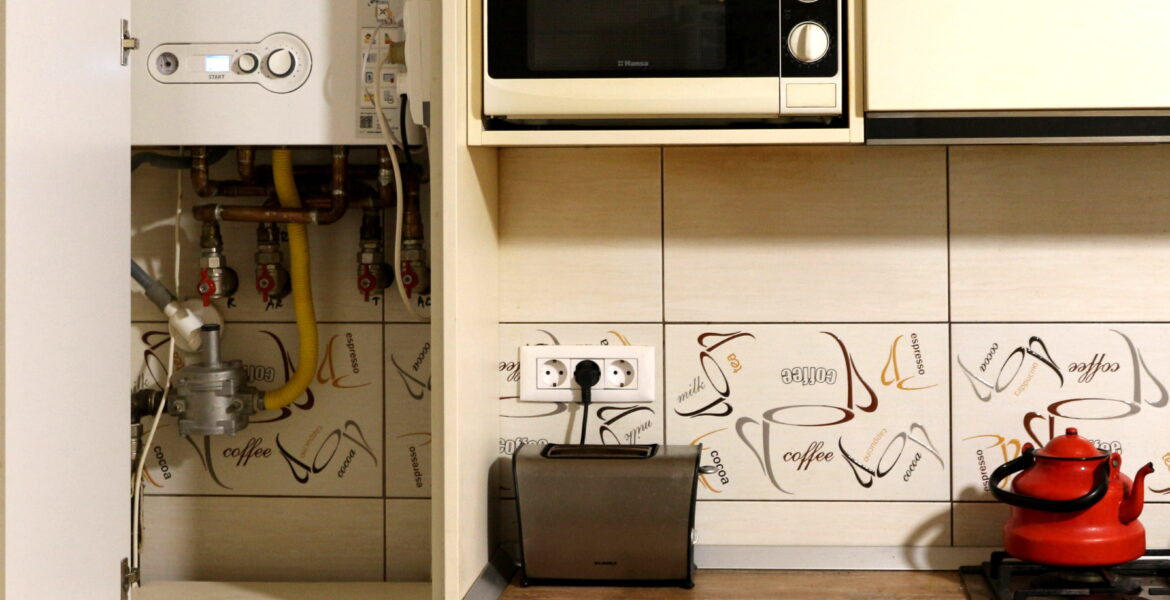
Combi vs System Boiler: Which for Your Home?
On November 12, 2026 by swllwheatinThe short answer: count bathrooms, check your mains, then check your space
A combi (combination) boiler heats water on demand and has no cylinder. A system boiler heats a stored cylinder of hot water and has no loft tanks. Both are modern condensing boilers, both can be efficient, and both suit millions of UK homes — but they fail in different ways, so the choice comes down to three questions:
1. How many bathrooms run at once? One bathroom, used by one person at a time, suits a combi. Two showers at once suits a cylinder. 2. How strong is your mains water? A combi can only deliver what the mains supplies. Weak mains flow caps combi performance no matter how many kilowatts you buy. 3. Do you have space for a cylinder? A system boiler needs an airing cupboard or utility space for a cylinder (typically 120–300 litres). No space, no system boiler — unless you are willing to create it.
Answer those three and the choice usually makes itself. Everything else — cost, efficiency, future heat pump plans — refines it.
Source context: what each boiler actually does
Combi boiler
A combi takes cold water from the mains, heats it instantly through a heat exchanger when a tap or shower opens, and sends it straight to the outlet. It also heats radiators through a separate circuit. There is no stored hot water anywhere: no cylinder, no loft tanks, no waiting for a tank to reheat.
Because it heats water on demand, a combi's headline kilowatt rating is set by hot water, not heating. A typical combi is 24–42kW, but most of that capacity exists for the shower; the same boiler may only use around 24kW for the radiators. That is normal, not a fault.
System boiler
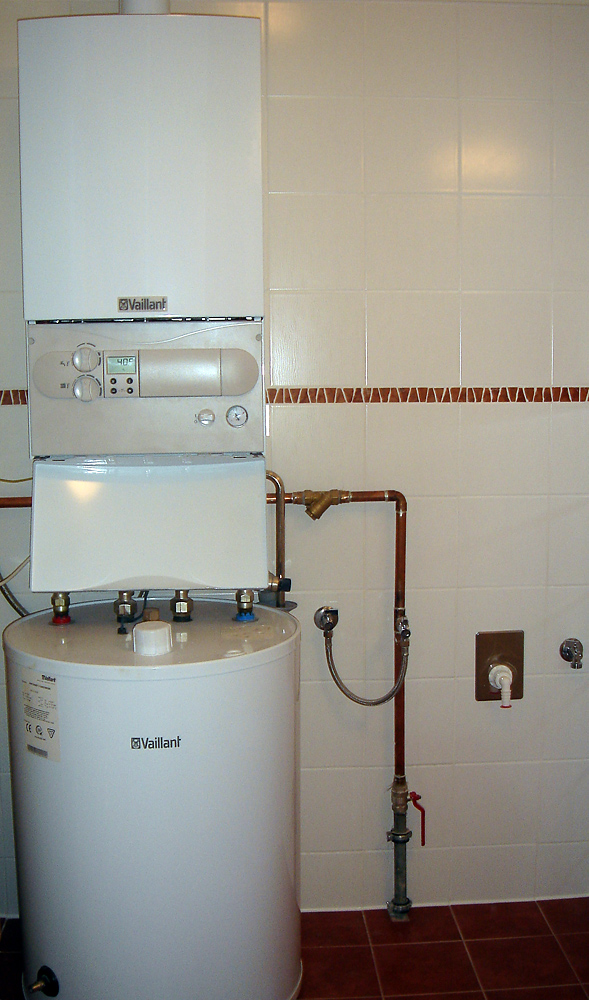
A system boiler heats water and stores it in an unvented cylinder, ready to use. The cylinder is pressurised from the mains, so hot water arrives at mains pressure at every tap. The boiler itself only has to meet the heating load and reheat the cylinder over time, so its rating is much smaller — typically 12–40kW depending on house size, with 12–26kW covering most homes.
System boilers have no feed-and-expansion tank in the loft (that is the old regular boiler's job). The expansion vessel and pump are built into the boiler, which is why a system boiler looks like a combi from the outside but behaves differently.
Regular boiler, briefly
The older regular (heat-only, conventional) boiler also feeds a cylinder, but with a vented system: a cold-water tank in the loft and a feed-and-expansion tank. Regular boilers still make sense in homes with very weak mains pressure or complex older systems, but for most replacements the choice is combi versus system, and this article focuses there.
Hot water performance: the deciding difference
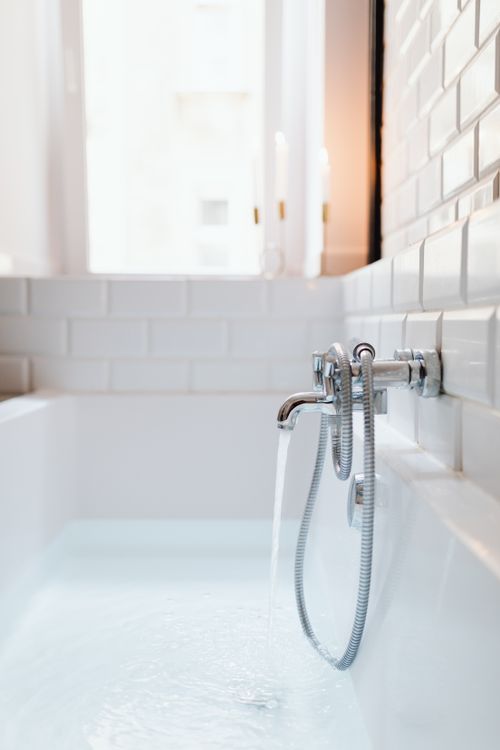
One bathroom. A combi shines. Open the tap, hot water arrives in seconds, and it never runs out — the boiler keeps heating as long as water flows. For a flat or a small house with one bathroom, a combi is hard to beat on simplicity and cost.
Two bathrooms, used separately. A combi usually copes, with a caveat: if someone opens a hot tap while you are showering, the shower flow or temperature will dip. Most households accept that. A 30–35kW combi handles this pattern in a typical 3-bedroom house.
Two showers at once. This is where a combi struggles and a cylinder wins. A combi splits its flow between the two showers, so both go weak and temperature can fluctuate. A cylinder delivers stored hot water at mains pressure to both showers at once, until the cylinder empties — a 210-litre cylinder covers roughly two back-to-back showers plus washing-up, and a 250–300 litre cylinder covers more.
Big baths. A large bath (200 litres or more) takes a long time to fill from a combi, because the combi's flow rate is its limit — typically 10–16 litres per minute for a domestic combi, depending on rating and incoming mains temperature. A cylinder fills a big bath faster, because it draws on stored water at full mains flow.
Mains flow rate caps everything. Measure it before choosing. A combi fed by a weak mains supply — common in older properties, upper-floor flats and rural homes — cannot deliver a powerful shower however large the boiler. Ask the installer to measure flow rate in litres per minute and dynamic pressure at a tap. As a rough guide, below about 12 litres per minute a combi will feel weak, and a system boiler with a cylinder deserves serious consideration.
Space, installation and cost
Space. A combi needs only wall space in a kitchen or utility room — no cylinder, no tanks. That is why combis dominate flats and small houses. A system boiler needs the same wall space plus a cylinder cupboard. In a small flat that cupboard may not exist, and losing a cupboard to a cylinder is a real cost in a small home.
Installation cost. As broad installed ranges (boiler, flue, controls, labour — not a quote):
- Combi replacement (like-for-like): roughly £2,000–£3,500
- System boiler plus new unvented cylinder: roughly £2,500–£4,500
A like-for-like combi swap is usually the cheapest job, because there is no cylinder to fit and less pipework to change. Switching from a combi to a system boiler costs more, because the cylinder, pipework and controls are added. Switching from a regular boiler with loft tanks to a system boiler can actually simplify the system and free the loft, but the cylinder work still adds cost. Always get itemised quotes; boiler brand and warranty length move the price as much as the boiler type.
Running costs. For the same house and heating load, running costs are close. Both are condensing boilers, and efficiency depends more on flow temperature, controls and radiator sizing than on combi versus system. A combi wastes a little energy on pre-heat if that mode is left on (it can usually be switched off); a cylinder loses a small amount of heat through its insulation over 24 hours. Neither difference should decide the choice alone.
Efficiency and controls
Both boiler types benefit from the same efficiency measures: low flow temperatures (so the boiler condenses), weather compensation, and a room thermostat with thermostatic radiator valves (TRVs). A system boiler with a cylinder has one extra control worth having: a cylinder thermostat and a timed hot-water schedule, so the boiler reheats the cylinder when needed rather than keeping it hot all day. Most modern controls do this automatically.
One practical difference: a system boiler can heat the cylinder and the radiators on separate schedules. A combi heats water only when a tap opens, so there is nothing to schedule — which is simpler, but also means the combi fires for every small hot-water draw, including a hand wash.
Future-proofing: heat pumps and solar
Heat pumps need a cylinder. An air source or ground source heat pump cannot heat water on demand like a combi; it heats a cylinder over time. If you think you may switch to a heat pump in the next 10 years — and the Boiler Upgrade Scheme currently offers £7,500 towards an air source or ground source heat pump in England and Wales, or £9,000 for eligible off-gas-grid homes heated by oil or LPG until 31 March 2027 — a system boiler keeps that door open without a cylinder retrofit later. A combi household switching to a heat pump must add a cylinder at that point, with the space and pipework that involves.
Solar thermal and solar PV diversion also need a cylinder to store the heat or the diverted electricity as hot water. A combi cannot store either. If solar is in your plans, a cylinder is part of the system whether you buy it now or later.
Which suits which home?
| Home pattern | Best fit | Why |
| Flat or 1–2 bed house, 1 bathroom, good mains | Combi | Simple, compact, no cylinder, hot water never runs out |
| 3-bed house, 1 bathroom + en-suite, good mains, no simultaneous showers | Combi (28–35kW) | Handles the pattern; cheapest install |
| 3–4 bed house, 2 bathrooms, simultaneous showers | System + 180–300 litre cylinder | Both showers at full flow; big baths fill fast |
| Weak mains flow (below ~12 litres per minute) | System, or regular, or mains booster | Combi performance is capped by the mains whatever the kW |
| No space for a cylinder | Combi | The cylinder has to go somewhere; if it cannot, the choice is made |
| Planning a heat pump or solar within 10 years | System | Cylinder already in place; avoids a retrofit later |
| Large house, 3+ bathrooms | System + large cylinder, possibly two cylinders or a thermal store | No single domestic combi serves three simultaneous showers well |
Mistakes to avoid
- Buying kilowatts to fix weak mains. Measure flow first. A 40kW combi on a 9-litre-per-minute mains supply still gives a weak shower.
- Choosing a combi for two simultaneous showers because the brochure says it can. It can, in the sense that water comes out of both. It cannot give both a strong, stable shower at once. Test the claim against your actual morning routine.
- Forgetting the cylinder's space and weight. A 300-litre cylinder full of water weighs 300kg plus the cylinder itself. The floor must support it, and the cupboard must fit it with access for servicing.
- Skipping the heat loss calculation. Boiler size should come from a room-by-room heat loss calculation, not bedroom count.
Questions to ask your installer
1. What mains flow rate and dynamic pressure did you measure, and what does that mean for a combi in this house? 2. How many showers will run at once in our real morning routine, and which boiler type handles that? 3. Where would the cylinder go, and is the floor strong enough for a full cylinder? 4. What is the room-by-room heat loss, and what boiler size does it give for each option? 5. If we switch to a heat pump later, what would need to change under each option? 6. What warranty length and service plan come with each quote, and what does the warranty exclude?
FAQ
Can you replace a combi with a system boiler?
Yes, but it is a conversion, not a swap: a cylinder must be fitted, pipework changed, and controls added. Budget for the conversion cost on top of the boiler, and check that a suitable cylinder location exists.
Can you replace a system boiler with a combi?
Yes, and it frees the cylinder cupboard — but you lose stored hot water, so two simultaneous showers become a problem. It suits households downsizing their hot-water demand, not growing it.
Is a system boiler more efficient than a combi?
Not inherently. Both are condensing boilers; efficiency depends on flow temperature, controls, radiator sizing and usage pattern. The cylinder's standing heat loss is small on a modern insulated cylinder, and the combi's pre-heat mode can be switched off.
Do system boilers work in flats?
They can, if there is space for a cylinder and the mains pressure is adequate for an unvented cylinder. Many flats have neither, which is why combis dominate flats. Check both before assuming.
How long does each last?
A well-maintained modern boiler of either type typically lasts 12–15 years or more. Lifespan depends more on installation quality, water quality (inhibitor, filter) and annual servicing than on combi versus system.
Bottom line
One bathroom and good mains: combi. Two showers at once, a big bath, or weak mains: system with a cylinder. Planning a heat pump: system. Space for no cylinder at all: combi. Decide on your real hot-water routine, not on the brochure's best case.