Wet vs Electric Underfloor Heating UK: Costs Compared
On November 11, 2026 by swllwheatinThe short answer: wet is cheap to run and expensive to fit; electric is the reverse
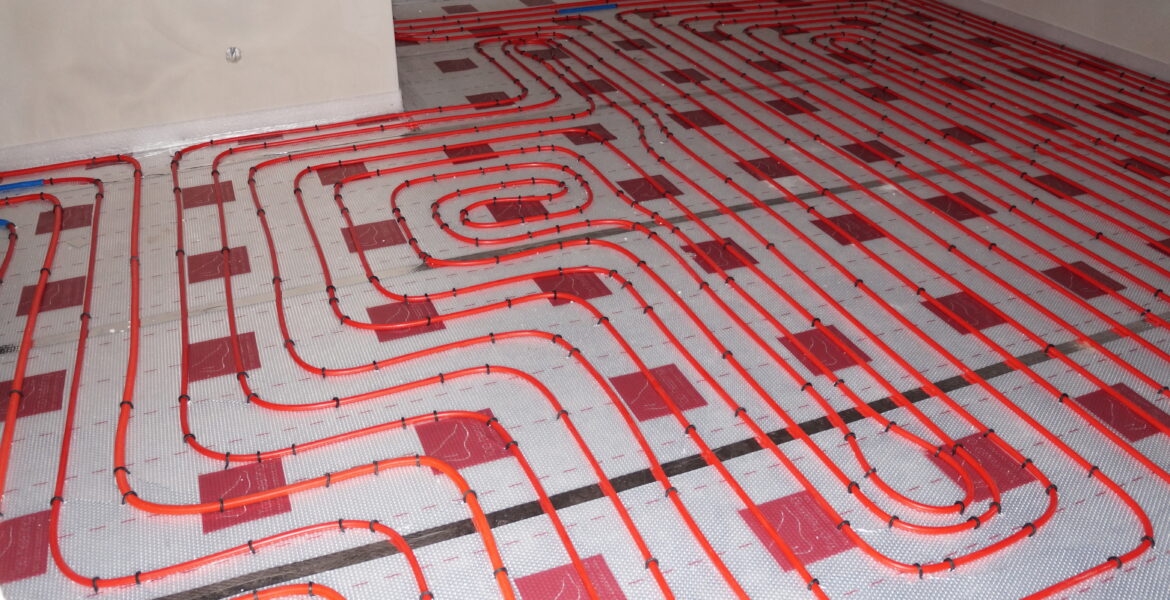
Wet and electric underfloor heating (UFH) look like the same product — warm floors, no radiators — but they are different systems with opposite economics. Wet UFH circulates warm water through pipes in the floor, fed by a boiler or heat pump. Electric UFH runs heating cables or mats under the floor, powered directly from the mains.
That single difference drives everything:
- Wet UFH costs more to install (pipes, manifold, screed, controls) but runs on gas or a heat pump, so each unit of heat is cheap.
- Electric UFH is cheap and simple to install (a mat, a thermostat, a connection to the mains) but runs on electricity at roughly three times the price of gas per unit of heat, so it is expensive to run for long hours.
The right choice is therefore mostly about room size and use: electric wins in a small bathroom used for short bursts; wet wins for a large kitchen, living space or whole floor that runs all day. Get that backwards and you pay for it every winter.
Source context: what each system actually is
Wet underfloor heating
A wet system lays loops of plastic pipe (usually PEX) across the floor, connected to a manifold that distributes flow to each room zone. The pipes sit in screed, in a retrofit overlay panel, or between joists. A boiler or heat pump supplies water at a low flow temperature — typically 35–45°C — which is why UFH pairs so well with heat pumps and condensing boilers: both are most efficient at low temperatures.
Wet UFH heats the whole floor as one large, low-temperature radiator. It is slow to warm up (an hour or two from cold in screed) and slow to cool down, which suits steady, all-day heating rather than quick bursts.
Electric underfloor heating
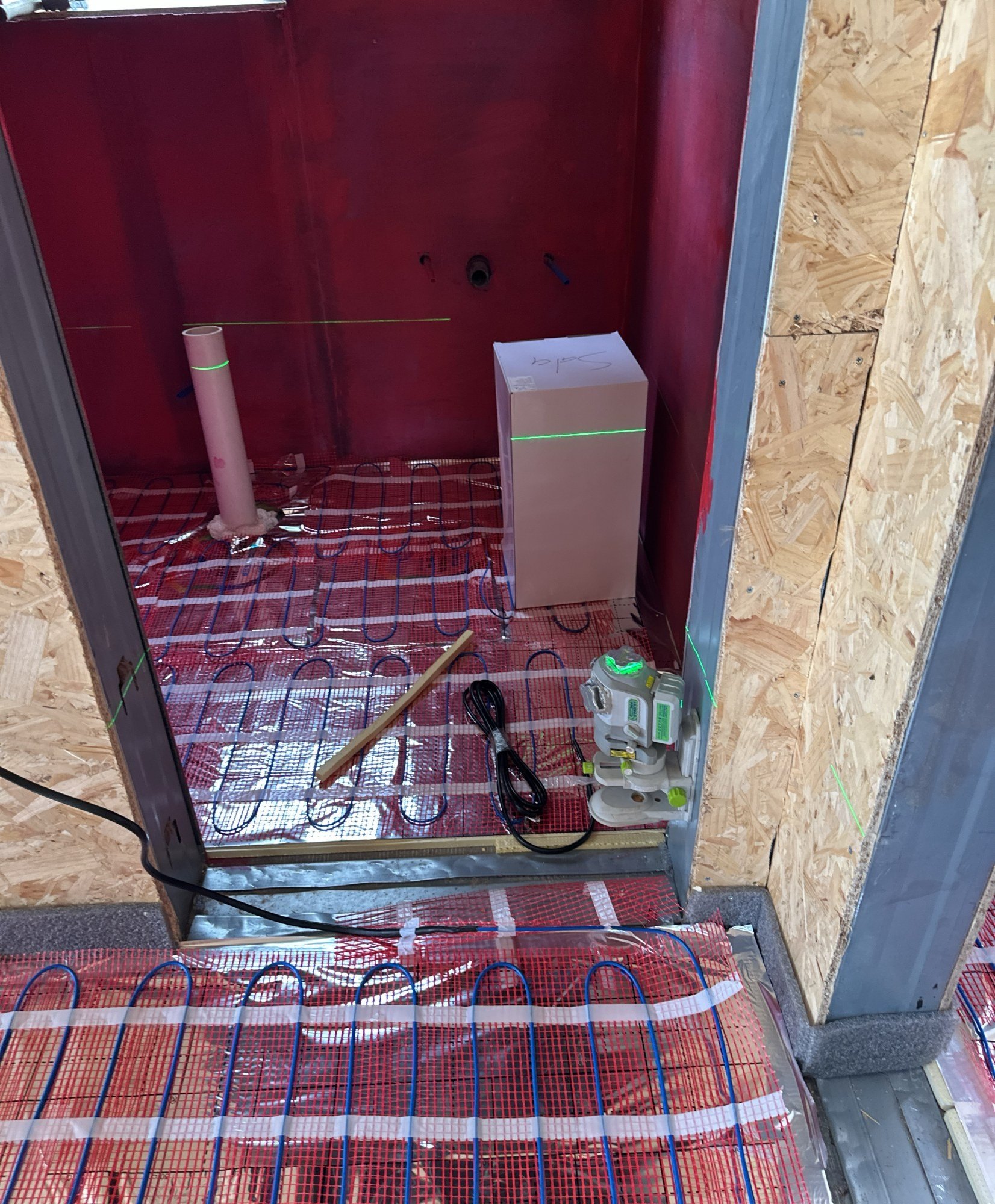
An electric system is a mat, mesh or loose cable fixed to the subfloor, covered with tile adhesive, levelling compound or laminate underlay depending on the floor finish. A thermostat with a floor sensor controls it. It heats quickly — 30 minutes or so to feel warm in a bathroom — but it heats only the room it is in, and every watt of heat comes from electricity at full price.
Electric UFH needs no boiler, no manifold and no pipework. That simplicity is its whole selling point — and its running-cost trap.
Installation costs compared
Installation prices vary widely by region, floor type and whether the job is new-build, renovation or retrofit, so treat the ranges below as planning guides for quotes, not prices. Always get at least two itemised quotes.
| System | Typical installed cost per m² | What drives the price |
| Wet UFH, new-build / full renovation | £50–£75 per m² | Screed depth, manifold and controls, boiler or heat pump connection |
| Wet UFH, retrofit overlay | £75–£120 per m² | Low-profile panels, floor-height changes, door and skirting adjustments |
| Electric UFH mat or cable | £40–£70 per m² installed | Mat wattage, floor finish, thermostat, electrician's connection |
Worked example — a 20 m² kitchen-diner: wet, in a renovation, roughly £1,000–£1,500 for the floor system itself, plus the cost of connecting it to the heat source if that is not already in place; electric, roughly £800–£1,400 for the mat, thermostat and fitting. The gap looks small at this size, and in a small room electric can actually be cheaper overall.
Three installation costs people forget:
1. Floor height. Wet screed adds 65–75mm or more; retrofit overlay panels add 15–30mm. Doors, skirting, kitchen plinths and steps all need adjusting, and that joinery work is often extra. 2. Controls. A wet system needs a manifold, zone controls and usually a wiring centre. A single-room electric mat needs one thermostat. Multi-room electric systems need one thermostat per room, and the costs add up. 3. Electrical capacity. A whole house on electric UFH draws a lot of current. Large installations may need a consumer-unit upgrade or a dedicated circuit per room — ask the electrician before ordering mats.
Running costs compared at Oct–Dec 2026 tariffs
All maths below uses the Ofgem price cap average rates for direct-debit customers in England, Scotland and Wales for 1 October to 31 December 2026: electricity 26.32p per kWh and gas 7.97p per kWh. Your tariff and region will differ, and the cap changes quarterly — re-check the current cap before relying on these figures for a purchase decision.
The per-hour maths
Electric UFH is simple to calculate because 1 kW of electricity becomes 1 kW of heat. A standard mat outputs around 150W per m²:
- 1 m² for 1 hour: 0.15 kWh × 26.32p = about 4p per m² per hour
- 10 m² bathroom for 1 hour: about 40p
- 20 m² kitchen for 1 hour: about 79p
Wet UFH on a gas boiler is cheaper per unit of heat. If the floor needs 100W of heat per m² (a typical design figure for a reasonably insulated room) and the boiler runs at around 90% efficiency, the gas used is about 0.11 kWh per m² per hour:
- 1 m² for 1 hour: about 0.9p per m² per hour
- 20 m² kitchen for 1 hour: about 18p
Wet UFH on a heat pump with a seasonal efficiency (SCOP) of around 3 — a realistic mid-range figure for a well-designed low-temperature system, not a promise — uses about 0.033 kWh of electricity per m² per hour:
- 1 m² for 1 hour: about 0.9p per m² per hour
- 20 m² kitchen for 1 hour: about 18p
Notice that wet UFH on gas and wet UFH on a heat pump land in a similar place at current tariffs, because electricity costs roughly 3.3 times as much as gas per unit while the heat pump delivers roughly 3 units of heat per unit of electricity. If electricity prices fall relative to gas, or SCOP rises, the heat pump pulls ahead; if SCOP falls (cold weather, high flow temperatures), gas pulls ahead.
What that means over a heating season
The per-hour gap looks small; the seasonal gap is not. Take a 20 m² room heated 8 hours a day for 150 days:
- Electric: 79p × 8 × 150 = roughly £948
- Wet on gas or a heat pump: 18p × 8 × 150 = roughly £216
Those are illustrative figures, not bills: real rooms cycle on and off under thermostat control, heat demand varies with insulation and weather, and a heat pump's SCOP varies through the season. But the direction and scale are robust — electric UFH for a large room, all day, all winter, is a different order of cost from wet UFH. That is why electric mats are sold for bathrooms and small kitchens, not whole houses.
Room-by-room: which system where
Bathroom (5–10 m², short bursts). Electric usually wins. The mat is cheap, warms quickly for morning showers, and runs for an hour or two a day. Seasonal cost for a 10 m² bathroom at 2 hours a day for 150 days is roughly £120 on electricity — acceptable for the comfort, and far cheaper than extending a wet system into a room that may be on a different floor from the manifold.
Kitchen-diner (20–40 m², all-day use). Wet usually wins, if the floor is being redone anyway. The running-cost saving repays the higher installation cost over several years, and the even floor heat suits a large open-plan space. If the floor is not being lifted, electric is the pragmatic compromise — just budget for the running cost honestly.
Whole ground floor / extension. Wet, almost always. The running-cost gap over a whole floor is hundreds of pounds a year, and a wet system integrates with the main heating controls. Whole-house electric UFH is rarely sensible on running costs unless the house is exceptionally well insulated and the system is used sparingly.
Upper floors and retrofit rooms. Wet UFH between joists or in overlay panels is possible but disruptive and raises floor levels; electric mats are far easier. For a single bedroom or study, electric is often the right answer despite the tariff — the room is small and may only need heat in the evening.
Controls and comfort differences
Warm-up time. Electric mats reach temperature in roughly 30–60 minutes. Wet screed systems can take 1–3 hours from cold, which is why they are run on a steady schedule with setback temperatures rather than switched on and off like radiators.
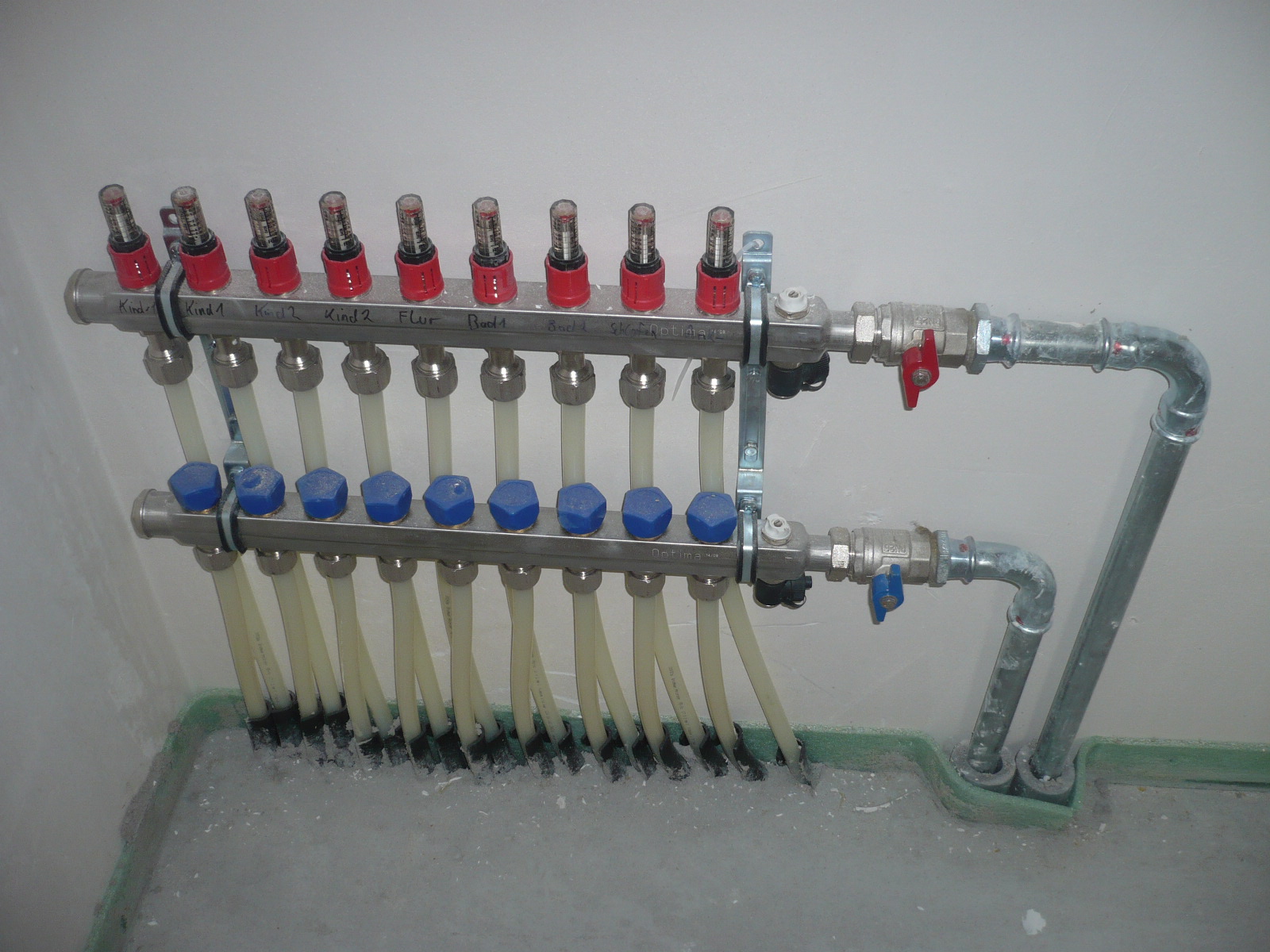
Zoning. Wet systems zone by manifold loop, so each room or area gets its own thermostat and schedule. Electric systems zone by thermostat per room, which is simple but means a separate controller in every room.
Payback: when does wet repay its premium?
Take a 20 m² kitchen-diner, heated 8 hours a day for 150 days. Using the illustrative figures above, wet saves roughly £700 a year in running costs against electric at current tariffs. If wet costs £500 more to install than electric in that room, the premium repays in under a year on those assumptions. If the room is heated only 2 hours a day, the saving falls to roughly £180 a year and the payback stretches to several years.
The honest rule: the more hours and the larger the area, the faster wet repays. The smaller and more occasional the use, the less the running-cost gap matters and the more electric's simplicity wins. Any installer who quotes payback without asking how many hours the room is heated is guessing.
Common mistakes
- Putting electric UFH across a whole house on the assumption that "underfloor heating is efficient." The emitter is not the efficiency; the heat source is. Electric resistance heating is 100% efficient at turning electricity into heat, but electricity is the most expensive heat source per unit.
- Comparing installation prices without running costs. A £500 saving on installation can cost £500 a year in bills.
- Ignoring floor height. A 25mm overlay plus tile adhesive can stop doors closing and create trip steps at thresholds. Measure before ordering.
- Sizing electric mats by floor area alone. Mats should cover the free floor area, not the area under baths, units and fixed furniture.
FAQ
Is wet underfloor heating cheaper to run than electric?
Yes, substantially, for the same room and hours — typically a quarter to a third of the cost at current tariffs, because wet UFH runs on gas or a heat pump while electric UFH runs on full-price electricity.
Can I install electric underfloor heating myself?
A competent DIYer can lay the mat, but the final electrical connection must be done by a qualified electrician, and the work is notifiable under Part P of the Building Regulations in England and Wales.
Does underfloor heating work with a combi boiler?
Yes. A combi can feed a wet UFH zone, usually through a mixing valve that blends the boiler flow down to the low temperature UFH needs. The installer must check that the boiler's minimum output suits the UFH zone size, or the boiler will short-cycle on a small zone alone.
Is underfloor heating worth it in a bathroom only?
Usually yes, in comfort terms: warm tiles on winter mornings for a modest running cost if the mat runs for an hour or two a day. It is one of the few places where electric UFH is clearly the right choice.
Bottom line
Wet UFH for large areas and long hours; electric UFH for small rooms and short bursts. The installation saving on electric is real, but it is a one-off — the running-cost gap repeats every winter. Price both systems for your actual room size and heating hours, at your actual tariff, before deciding.