What Size Boiler Do I Need? UK Sizing Guide
On November 8, 2026 by swllwheatinThe short answer: a combi is sized by hot water, a system boiler by heating
Most boiler sizing advice starts in the wrong place: the number of bedrooms. Bedrooms are a rough proxy, but the number that actually decides the size is different depending on the boiler type.
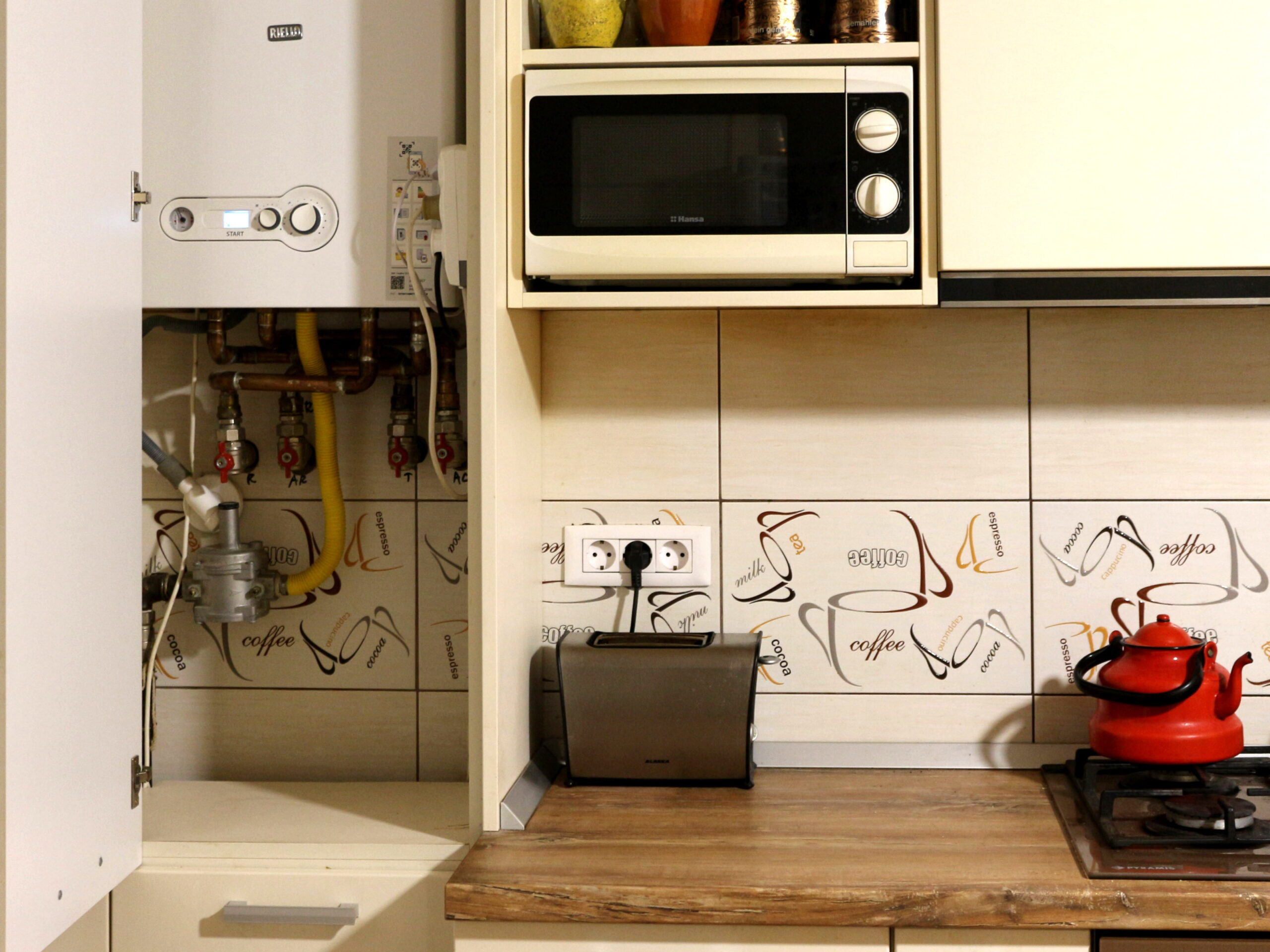
- Combi boiler: sized mainly by hot water demand — how many bathrooms and showers, and whether they run at the same time. Most combis deliver far more power for hot water than the house needs for heating, so the heating load rarely sets the size.
- System or regular (heat-only) boiler: sized mainly by the home's heating load plus hot water cylinder reheating, because the cylinder stores hot water ready to use. These boilers are usually much smaller in kilowatts than the combi equivalent.
- Every type: the correct size is confirmed by a room-by-room heat loss calculation, not by a table. Tables get you into the right neighbourhood; the survey picks the house.
A Gas Safe registered engineer must install a gas boiler in the UK, and that engineer should carry out the heat loss calculation and check gas supply and mains water flow before recommending a model. Use this guide to understand the recommendation, challenge a quote that looks wrong, and avoid paying for a boiler far bigger than your home needs.
What "size" means: kilowatts, not physical dimensions
Boiler size means output in kilowatts (kW) — the rate at which the boiler transfers heat into water. A higher kW rating means the boiler can heat more water, faster, and support more radiators or a stronger shower. It does not mean a physically larger box: a 35kW combi and a 24kW combi are often near-identical in size.
One subtlety matters with combis. Many have two ratings: a higher output for hot water and a lower maximum for central heating. A 35kW combi, for example, may only use around 24kW for heating the radiators, with the full 35kW available when a hot tap opens. That is normal, not a fault — and it is why combi sizing tables look generous compared with system boiler tables for the same house.
Combi boiler sizing: bathrooms first
A combi heats water on demand, with no cylinder. Its limit is flow: how much hot water it can deliver at once, at a usable temperature. More bathrooms and simultaneous showers need more kilowatts.
| Home | Bathrooms / showers | Typical combi size |
| Flat or small house, up to 10 radiators | 1 | 24–28kW |
| 3-bedroom house, up to 15 radiators | 1 bathroom + en-suite | 28–34kW |
| Larger house, up to 20 radiators | 2 bathrooms | 30–35kW |
| Large house, 20+ radiators | 2+ bathrooms | 35–42kW |
These are widely published trade-guide ranges, and they agree with each other closely. Two cautions:
Simultaneous use is the real test. A 35–40kW combi can serve two bathrooms, but only comfortably if both showers are not running at full flow at the same time. If your household genuinely runs two showers together every morning, a system boiler with a stored cylinder is usually the better answer.
Mains flow rate can cap everything. A combi can only deliver what the incoming mains can supply. If your cold mains flow is weak — common in older properties and upper-floor flats — even a 40kW combi cannot produce a powerful shower. Ask the installer to measure mains flow rate (in litres per minute) and dynamic pressure at a tap before sizing. Buying a bigger combi to fix weak mains pressure is money wasted.
System and regular boiler sizing: heating load first
A system boiler (with an unvented cylinder) or a regular boiler (with a vented cylinder and, traditionally, loft tanks) stores hot water, so the boiler itself only has to meet the heating load and reheat the cylinder over time. That is why the kilowatt figures are so much smaller:
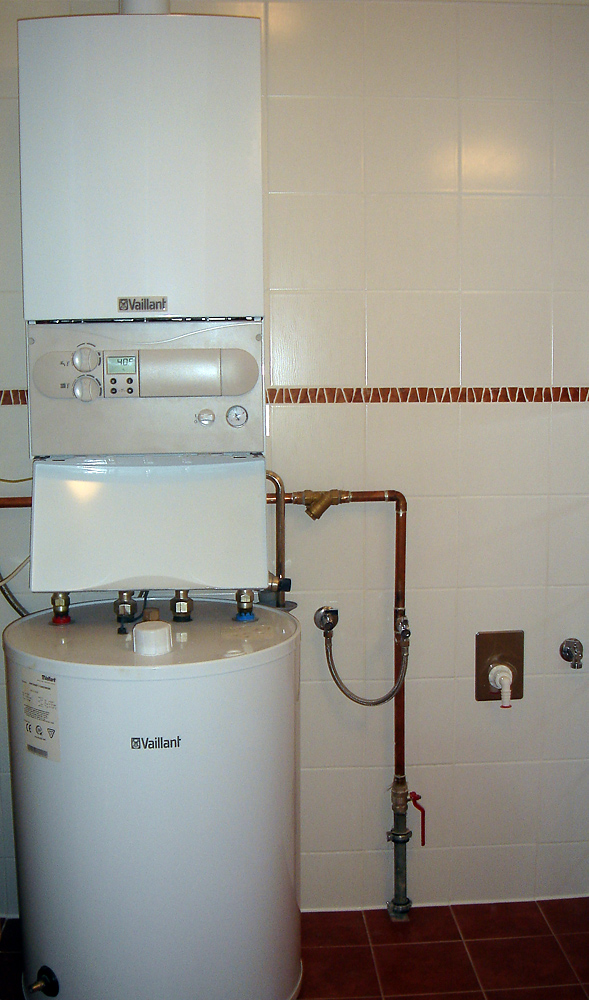
| Home | Bathrooms | Typical system / regular boiler size | Typical cylinder size |
| Flat or small house, up to 10 radiators | 1 | 12–18kW | 120–180 litres |
| 3–4 bedroom house, 10–15 radiators | 1–2 | 18–26kW | 180–210 litres |
| Large house, 20+ radiators | 2–3 | 27–40kW | 210–300 litres |
Cylinder size matters as much as boiler size here: too small a cylinder and the hot water runs out during back-to-back baths, however powerful the boiler. A 180–210 litre cylinder suits a typical 3–4 bedroom home; larger households, big baths and multiple simultaneous showers push towards 250–300 litres. A system boiler also leaves the door open to a future heat pump, which needs a cylinder — a combi does not.
The proper method: a room-by-room heat loss calculation
Tables are a starting point. The proper method is a heat loss calculation to BS EN 12831, done room by room. It accounts for:
- Room volumes and ceiling heights — a Victorian room with 3-metre ceilings needs more heat than a modern room of the same floor area.
- Wall construction — solid brick loses far more heat than insulated cavity wall.
- Windows — size, glazing type and draughts.
- Insulation — loft, floor and wall insulation levels.
- Design outdoor temperature — the coldest temperature the system is designed for, which varies by region.
- Ventilation and air changes — draughty homes lose heat through air leakage as well as through fabric.
The result is a heating load in kilowatts — and it is usually smaller than people expect. A typical 3-bedroom semi may need only around 6–10kW of heat on a cold winter day; a 2-bedroom flat perhaps 3–6kW; a large 4-bedroom house perhaps 9–14kW. Compare those figures with a 30kW combi and the point becomes clear: for heating alone, most homes need far less than the combi's headline rating. The extra kilowatts are for hot water, and they are idle most of the time.
This is also why radiator sizing and boiler sizing are different jobs. Radiators are sized per room from the same heat loss calculation — each room's radiators must give off enough heat at the system's design flow temperature. A correctly sized boiler feeding undersized radiators still leaves rooms cold; an oversized boiler feeding correctly sized radiators still wastes money.
The oversizing trap: why bigger is not better
It is tempting to buy a bigger boiler "to be safe." Resist it. Oversizing causes real problems:
Short cycling. An oversized boiler reaches its set temperature quickly, switches off, cools, and fires again — repeatedly. Each cycle wastes energy in start-up and wears components faster. Modern boilers modulate — they turn output down to match demand — and a wide modulation ratio softens this effect, but it does not remove it.
Condensing efficiency suffers. A condensing boiler only achieves its headline efficiency when return water is cool enough (below about 55°C) for water vapour in the flue gases to condense. A short-cycling, oversized boiler spends less time in steady condensing operation. Pairing an oversized boiler with high flow temperatures on small radiators is the worst combination: high cost, low efficiency, uneven rooms.
You pay twice. A bigger boiler costs more to buy, and its inefficiency costs more to run. The "safety margin" of an extra 10kW is not free insurance; it is a standing cost for the boiler's whole life.
The honest safety margin is small. If the heat loss calculation says 8kW and the cylinder needs a few kilowatts for reheating, a 12–15kW system boiler is right; a 30kW one is not "safe," it is oversized.
Special cases that change the answer
High ceilings and old houses. Solid-wall Victorian and Edwardian homes, tall rooms, single glazing and draughts push heating loads well above the table figures for the same number of bedrooms. A 3-bedroom Victorian terrace can need the heating capacity of a much larger modern house. This is where a heat loss survey earns its fee — and where radiator upsizing, draught-proofing and insulation change the boiler answer too.
Underfloor heating. Wet underfloor systems run at low flow temperatures (35–45°C), which suits condensing boilers, but the boiler and controls must be set up for it, with weather compensation ideally. The boiler's kilowatt size does not change much; the flow temperature and control strategy do.
Extensions and future plans. If a loft conversion or extension is planned within a few years, say so — sizing for the future house avoids replacing a boiler twice. But do not pay for capacity for an extension that may never happen.
Low water pressure areas and flats. As noted, weak mains flow caps combi performance. In a flat, also check whether the building restricts flue positions or boiler types, and whether a system boiler with a cylinder is feasible given space.
Questions to ask your installer
1. What is the room-by-room heat loss, and what heating load does it give? Ask to see the calculation, not just a kilowatt figure. 2. What mains flow rate and pressure did you measure? For a combi, this decides whether the headline kW can actually be delivered. 3. How many bathrooms will run at once, and is the boiler sized for that? Be honest about simultaneous showers. 4. What is the boiler's minimum modulation output? A low minimum (for example, under 5kW on a small home) reduces short cycling. 5. What flow temperature is the system designed for, and is weather compensation included? Lower flow temperatures improve condensing efficiency on any boiler. 6. What cylinder size are you specifying, and why? For system and regular boilers, the cylinder is half the decision.
If an installer quotes a boiler size without a heat loss calculation, without measuring mains flow, or purely from the number of bedrooms, get a second quote. The survey takes time, but it is the difference between a boiler that fits the house and one that merely fits the wall.
FAQ
What size boiler do I need for a 3-bedroom house?
For a typical 3-bedroom house with one bathroom, a 24–30kW combi is the usual guide range, or a 12–18kW system boiler with a 180–210 litre cylinder. The exact figure depends on insulation, ceiling heights, radiator count and whether a second shower runs at the same time — a heat loss calculation settles it.
Is a 30kW combi enough for a 4-bedroom house?
For a 4-bedroom house with one bathroom, usually yes. With two bathrooms used at the same time, it may struggle, and a 35kW combi or a system boiler with a cylinder is often the better choice. Mains flow rate matters as much as kilowatts here.
Can a boiler be too big?
Yes. An oversized boiler short-cycles, wears faster, condenses less efficiently and costs more to buy and run. Modern modulation reduces the harm but does not remove it. Size to the heat loss calculation plus genuine hot water demand, not to the largest model available.
Does a heat pump need the same sizing approach?
The principle — room-by-room heat loss first — is identical, and arguably more important, because a heat pump's efficiency depends heavily on flow temperature and emitter sizing. Heat pump kilowatt ratings are lower than combi ratings for the same house, because hot water comes from a cylinder rather than on demand.
Bottom line
For a combi, count bathrooms and simultaneous showers, then check mains flow. For a system or regular boiler, trust the heat loss calculation and size the cylinder honestly. In both cases, resist the bigger-is-better instinct: an oversized boiler costs more, cycles more and condenses less. The right boiler is the smallest one that genuinely meets your heating load and your hot water habits at the same time.