Gas Boiler vs Heat Pump: Running Costs Compared 2026
On October 30, 2026 by swllwheatinThe short answer: a well-designed heat pump is slightly cheaper to run than a gas boiler — a badly designed one is not
Most answers to this question quote a single number, and most are therefore wrong. A heat pump is not "£300 a year cheaper" or "always more expensive." At October 2026 tariffs, the answer depends on one number above all others: the heat pump's real seasonal efficiency in your house.
- A modern condensing gas boiler at 90% efficiency turns gas at 7.97p per kWh into useful heat at 8.86p per kWh.
- A heat pump on electricity at 26.32p per kWh breaks even with that boiler at a seasonal coefficient of performance (SCOP) of 2.97. Above 2.97, the heat pump is cheaper per unit of heat. Below it, gas is cheaper.
- At SCOP 3.5 — realistic for a well-designed system at low flow temperatures — heat costs 7.52p per kWh, about 15% cheaper than gas per unit.
- At SCOP 2.5 — realistic for a poorly designed system forcing high flow temperatures through undersized radiators — heat costs 10.53p per kWh, about 19% dearer than gas.
Everything else here is about what pushes a real installation to one side of that line, and what the full cost looks like.
The tariffs used in this article
All maths uses the Ofgem price cap average rates for direct-debit customers in England, Scotland and Wales for 1 October to 31 December 2026:
- Electricity: 26.32p per kWh, standing charge 54.83p per day
- Gas: 7.97p per kWh, standing charge 29.68p per day
Electricity is therefore about 3.3 times the price of gas per kWh. That ratio — the spark gap — is the whole running-cost story in one number. The cap changes quarterly, and your own tariff and region will differ, so use the formulas here with your own rates rather than treating any annual figure as fixed. Domestic electricity VAT was temporarily removed from 1 October 2026 to 31 March 2027, already reflected in the 26.32p figure; gas includes 5% VAT.
How each system makes heat
Gas boiler
A modern condensing boiler burns gas and transfers most of the heat into water for radiators and hot water. At 90% efficiency, 90% of the energy in the gas becomes useful heat. In practice, it only reaches headline efficiency when it condenses — when return water is cool enough (below about 55°C) for water vapour in the flue gases to condense and release extra heat. A boiler running at high flow temperatures on old, small radiators, with poor controls, may run well below 90% in real use. Correct sizing, annual servicing and weather compensation all help it stay near its rated figure.
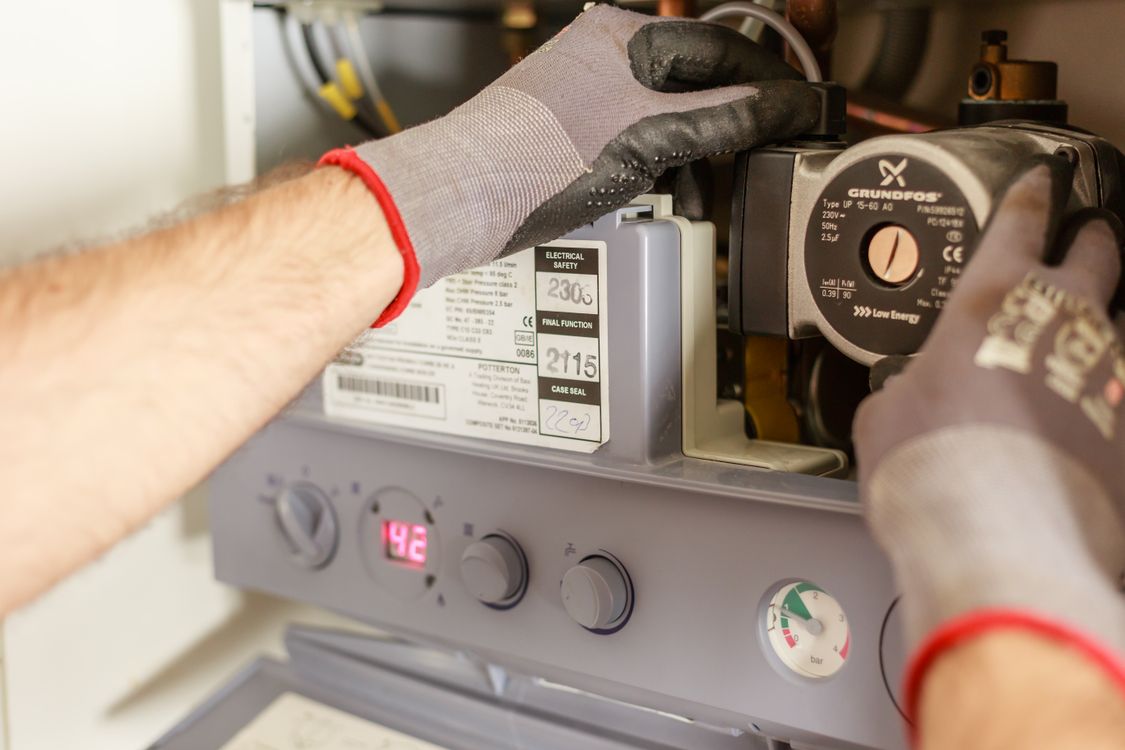
A combi boiler gives hot water on demand with no cylinder; a system or regular boiler stores hot water in a cylinder. That distinction matters for heat pumps, but for running costs the key point is simple: you pay for gas, you get roughly nine-tenths of it as heat.
Heat pump
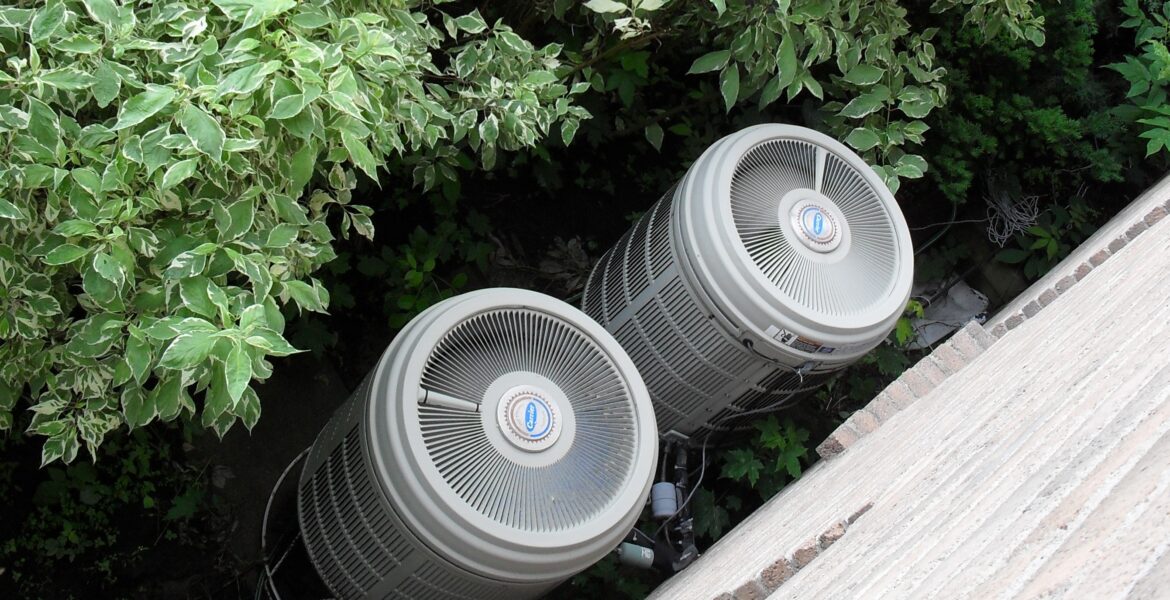
A heat pump does not create heat by burning fuel. It moves heat from outside air (air source) or the ground (ground source) into your home, using electricity to drive a compressor and refrigerant cycle. Because it moves heat rather than making it, it can deliver three or more units of heat for every unit of electricity. That ratio at a given moment is the coefficient of performance (COP); averaged over a heating season, including cold snaps, defrost cycles and hot water production, it is the SCOP, sometimes called SPF.
SCOP is not a property of the box alone. The same heat pump will record a high SCOP in a well-insulated home with large radiators or underfloor heating running at 35–45°C, and a low SCOP in a leaky home with small radiators forcing 60–70°C flow. Outdoor temperature matters too: efficiency falls on a freezing night compared with a mild October day. That is why headline COP figures quoted at a mild outdoor temperature and low flow temperature tell you little about your winter bill, and why a room-by-room heat loss survey and emitter sizing are not sales extras — they are the design.
Worked example: the same house, both systems
Take a home needing 10,000 kWh of useful heat a year for space heating and hot water. This is an illustration, not a claim about your home; a small flat may need 4,000 kWh and a large detached house 20,000 kWh or more. The per-kWh comparison is what transfers.
Gas boiler at 90% efficiency: gas needed 10,000 ÷ 0.90 = 11,111 kWh; fuel cost 11,111 × 7.97p = £886 a year, plus gas standing charge at 29.68p per day (£108 a year), for £994 before the electricity standing charge, which both households pay.
Heat pump at SCOP 3.5: electricity 2,857 kWh, costing £752 a year — a saving of £134 a year on fuel against gas.
Heat pump at SCOP 3.0: electricity 3,333 kWh, costing £877 a year — a saving of £9 a year, essentially a tie.
Heat pump at SCOP 2.5: electricity 4,000 kWh, costing £1,053 a year — £167 a year more on fuel than gas.
Now add the standing charge effect, routinely left out. If you remove gas entirely, you stop paying the gas standing charge — about £108 a year. That moves the honest break-even SCOP from about 2.97 on fuel alone to roughly 2.9 on total cost, and adds £108 a year to the heat pump's advantage in a fully electric home. It does not apply if you keep a gas hob, gas fire or hybrid system, and it is not a reason to disconnect gas on its own — but it is real money and belongs in the comparison.
Two conclusions follow. First, the fuel saving at standard tariffs is real but modest — roughly £100–£230 a year at SCOP 3.5–4.0, not four-figure savings. Second, the good-versus-bad installation gap (£752 versus £1,053 a year) is larger than the saving itself. Design quality is the decision.
What moves the numbers
Tariffs
Most heat pump owners should not be on a standard flat-rate tariff. Dedicated heat-pump and time-of-use tariffs offer cheaper overnight electricity, and a heat pump with a cylinder in a well-insulated home can shift much of its running into cheap periods. Research cited in 2026 suggested flexible tariffs could save up to around £600 a year against a standard tariff, but that depends on the household and is not a promise. Ask each installer to model your home on your actual tariff and to show the SCOP behind the annual figure. A quote showing only a yearly saving, with no SCOP and no tariff, cannot be checked.
Flow temperature and emitters
This is the largest controllable factor. Heat pumps are most efficient producing water at 35–45°C; underfloor heating is designed for that range. Radiators need to be larger to give off enough heat at those temperatures — roughly double the size compared with a boiler system. If existing radiators are kept and the heat pump is forced to run at 60°C or more, SCOP falls, sometimes below break-even.
Weather compensation — a control that lowers flow temperature automatically on milder days — is one of the cheapest efficiency measures available on either system, and it matters more on a heat pump than on a boiler. A heat pump run at a fixed high flow temperature all winter is a common and avoidable mistake.
Upfront cost and total cost over the system's life
Typical figures reported in 2026, from DESNZ Boiler Upgrade Scheme statistics and trade guides:
- Air source heat pump, fully installed: about £11,100–£15,600 before grants, median around £12,900 in April–June 2026. After the £7,500 Boiler Upgrade Scheme grant in England and Wales, the middle half of installs cost about £3,600–£8,100 net, median about £5,400.
- New gas boiler (like-for-like combi swap): roughly £2,200–£4,500, with no national grant for most homes.
- Ground source heat pump: typically £15,000–£35,000 before grants, because of groundworks.
Even after the grant, a heat pump typically costs a few thousand pounds more upfront than a boiler. Against a fuel saving of £134 a year at SCOP 3.5 plus £108 saved gas standing charge — £242 a year — simple payback on a £2,000–£3,000 premium is roughly 8–12 years, before servicing and any tariff advantage. That is not a reason to reject a heat pump: lifespans differ (heat pumps often 20–25 years against 10–15 for a boiler), carbon emissions fall, and off-gas-grid homes comparing against oil or LPG face a much stronger case. But it is a reason to reject any claim that a heat pump "pays for itself in three years" on fuel alone at standard tariffs. Budget also for extras quotes sometimes omit: radiator upsizing, a new cylinder, pipework insulation, controls and electrical upgrades. Ask for an itemised quote, and check what happens if the grant is not approved.
Grants and VAT in 2026
In England and Wales, the Boiler Upgrade Scheme pays £7,500 towards an air source, ground source or water source heat pump, deducted from the invoice by an MCS-certified installer who applies on your behalf. From 21 July 2026 to 31 March 2027, homes heated by oil or LPG with no mains gas connection could receive £9,000. Air-to-air heat pumps receive £2,500 and biomass boilers £5,000 in limited circumstances. Hybrid systems keeping a gas boiler alongside a heat pump do not qualify. Scotland has a separate scheme through Home Energy Scotland; Northern Ireland's equivalent has closed. Zero-rate VAT on qualifying installations applied until 31 March 2027, then was set to revert to 5% — check GOV.UK before committing, as a late-2026 quote may not hold in spring 2027.
When a gas boiler still wins, and when a heat pump clearly wins
A gas boiler is usually pragmatic when: the boiler has failed and needs fast replacement; the home is a flat with no outdoor space; radiators cannot be upsized; or the household cannot fund the upfront premium even after the grant. Scrapping a young, working boiler purely on principle rarely makes sense — choose when replacement is due anyway.
A heat pump is usually stronger when: the home is off the gas grid on oil or LPG; it is well insulated with space for a unit and cylinder; emitters can run at low flow temperatures; the household can use a time-of-use tariff; or the owner values lower carbon and a longer-lived system and accepts a longer payback.
Either can disappoint when: the system is mis-sized, controls are left at factory defaults, radiators are unbalanced, or the household is on the wrong tariff. Insist on a room-by-room heat loss survey to BS EN 12831, a stated design flow temperature, and a SCOP estimate for your home, not a brochure figure.
Frequently asked questions
Is a heat pump cheaper to run than a gas boiler in 2026?
At October–December 2026 cap rates, yes — if it achieves a SCOP above about 2.97, and more clearly above 3.5. At SCOP 3.5 on 10,000 kWh of useful heat, the fuel saving is about £134 a year, plus about £108 saved gas standing charge if gas is disconnected entirely. At SCOP 2.5, it costs about £167 a year more on fuel. Any quote should show its SCOP assumption.
Bottom line
At 2026 tariffs, the fuel maths is close — and that closeness is the point. A heat pump is not a guaranteed saving, and a gas boiler is not a guaranteed bargain. The households that save with heat pumps are the ones with a surveyed, correctly sized system running at low flow temperatures on a suitable tariff. If your quote cannot show you those three things, do not sign it — whatever system it is selling.
Related reading
- Underfloor heating vs radiators: running costs at 2026 UK tariffs
- Are heat pumps worth it in the UK? Honest 2026 assessment